The Cryptocurrency Bubble
The cryptocurrency bubble is one of the most publicized financial bubbles of the 21st century. Cryptocurrencies, commonly understood as virtual tokens, have been around for a few years, but they have gained tremendous popularity since 2000. Over the years, notable advances have been made, from the original Bitcoin to newer cryptocurrencies such as Ethereum, Tether, and Binancecoin. In the study of cryptocurrency bubbles, Bitcoin is the most widely referenced, particularly because it has been around much longer and attracts more investors.
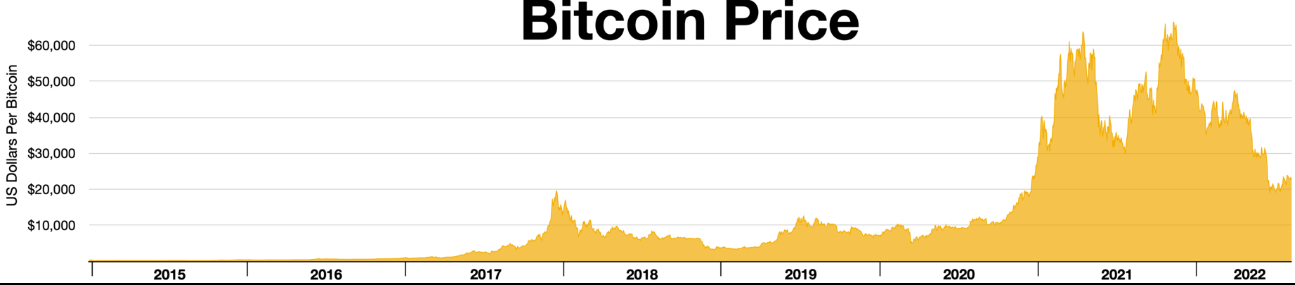
Financial data demonstrating this bubble shows unexplained sharp changes in Bitcoin prices in recent years. In February 2011, Bitcoin was priced at $1.06 and fell to $0.67 in April of the same year (Morris, 2021). In June 2011, the price shot up to $29.58 and dropped to $2.14 in November (Morris, 2021). By 2013, the price of Bitcoin stood at $1,127; in 2015, it was at $172 (Morris, 2021). The haphazard price fluctuations contributed to the bubble and led to the crash of Bitcoin’s currency.
As of 2020, the cryptocurrency bubble had experienced a rash where investors relied on gambling to invest, as shown in Figure 1 in the appendix. The market’s outrageous instability has prompted the exploration of other cryptocurrencies as a way to find much more reliable options. Truly, the unpredictable fluctuations in Bitcoin’s price are anomalous, as the figures vary greatly over a short period. The world’s richest people largely drive the bubble (Morris, 2021).
For example, when Warren Buffett spoke about currencies in 2018, the price shot up immediately. It is also motivated by emotionally driven decision-making, in which people fear losing profits (Caferra et al., 2021). They rush to invest, causing a momentary surge in demand and, thus, higher prices. To avert the consequences of the anomaly, investors should consider researching cryptocurrency as an emerging field of finance. A majority of people lack knowledge of how crypto works and rely on surface-level insights from articles. It is best to understand the entire concept before investing and making strategic moves.
The GameStop Bubble
The GameStop Bubble is one of the most recent market anomalies, having happened between 2020 and 2021. GameStop, a global retailer of video game solutions and electronics, has been in existence for many years. All the while, financial analysts publicly stated that it was a failing company, with its stock price standing at $20 as of 2014.
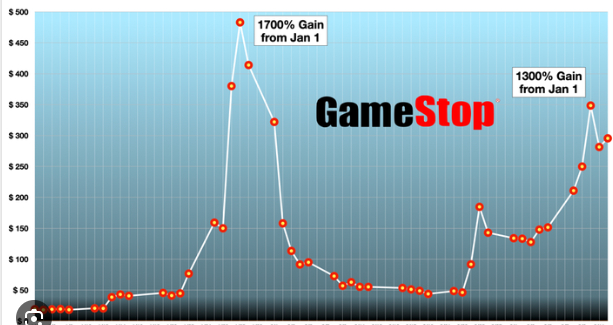
However, in the years after 2014, the public experienced a market frenzy in which prices rose sharply over a short period. In a twist of events, in January 2015, the stock price for GameStop rose to $40, as shown in Figure 2 in the appendix (Calhoun, 2021). In the first week of February, the stock was valued at $76, and by the end of the month, the price stood at $483 (Calhoun, 2021). Over this short period, the retailer company rose to become the most traded on the stock market.
The example of GameStop demonstrates a market anomaly driven by rapid shifts in its stock price. For a long time, the company was considered to have poor financial health and was not considered a lucrative investment. However, in the nick of time, its place in the market rose, and this gained attention in all financial papers. To a great extent, the bubble was fueled by the company’s shift in business model.
All the while, GameStop has operated on a brick-and-mortar model, which has been phased out in the 21st century. Once it switched to e-commerce, the results were reflected in the upsurge in its stock price (Calhoun, 2021). To avoid such market frenzies in the future, research is needed on the financial implications of business models in the prevailing global market environment. An in-depth understanding of market changes, investment, and the impact of critical decisions is pivotal for predicting stock prices.
NFT Bubble
The Non-Fungible Token (NFT) bubble occurred in 2021 following economic constraints from the COVID-19 pandemic. As with the cryptocurrency craze, by 2020, people needed to understand the essence of investing in digital assets. By the end of 2021, NFT investments totaled about $40 billion in blockchain digital assets (Quinn and Turner, 2020).
Interestingly, investors made substantial deposits into digital artwork that, to date, remain unclear as to where the capital is placed. By 2022, the NFT bubble had reached its peak with about $2 trillion in losses in the digital investment space. Within such a short time, the bubble had gained too much popularity, wooing investors who incurred millions of losses.
The turn of events by NFT fits the definition of a financial anomaly in every sense. One, there needed to be a clearer understanding of how the investment works. In 2022, as fund managers were attempting to regain the public’s confidence, innovative creators created platforms that hosted assets that appeared valuable. Such endeavors were not well explained.
Also, short-term market saturation contributed to the bubble, driving NFT prices to unreasonably high levels. Essentially, the NFT bubble illustrates uninformed investing, celebrity marketing, and speculation of the massive potential of the digital space (Quinn and Turner, 2020). To avoid such massive losses, investors must conduct due diligence on the investments they intend to make. They should also exercise caution when investing in virtual assets whose tangible value may be unclear.
Comparison of the Market Anomalies
All three examples explain the concept of financial anomalies in the simplest terms. For all of them, there are sharp and significant changes in stock prices. These changes attract the attention of investors who are not risk-averse. While assessing the causes of the market anomalies, it is evident that a lack of information is a key driver. The general public rushes to invest without studying the trends and business models that cause price fluctuations.
The examples also demonstrate the role of business news in spreading like wildfire and in determining stock prices, even for smaller companies. Unlike the cryptocurrency and NFT bubbles, GameStop set itself apart as a game changer in adopting the current economic frameworks that rely on e-commerce. To this end, it could be said that while market bubbles may be inevitable, it is more prudent to invest in businesses with a long-standing reputation rather than in emerging digital currencies and assets.
List of References
Caferra, R., Tedeschi, G. and Morone, A. (2021) ‘Bitcoin: Bubble that bursts or Gold that glitters?‘, Economics Letters, 205.
Calhoun, G. (2021) GameStop: were the short sellers routed? Does it matter? (Beware the ‘gamma’). Forbes.
Morris, D. (2021) A brief history of bitcoin bubbles. Fortune Crypt.
Quinn, W. and Turner, J.D. (2020) Boom and bust: a global history of financial bubbles. Cambridge: Cambridge University Press.
Appendix