
Introduction
The handling of radioactive waste poses several complications, making effective and secure tracking methods compulsory. Ensuring public and environmental safety by strictly adhering to guidelines and standards is vital to the complex, critical process of managing nuclear waste. The need for effective and safe tracking methods is a major concern in managing radioactive waste (Vander Beken et al., 2010).
However, according to Liu et al. (2018), RFID technology has promise since it enables improved security and real-time monitoring. The purpose of this research is to explore RFID’s potential for monitoring radioactive waste by analyzing its components, uses, advantages, and drawbacks. The analysis’s objective is to provide a comprehensive strategy for integrating RFID technology into a real-world nuclear waste management model, while accounting for market adoption, organizational requirements, and existing approaches.
Overview of RFID Technology
Definition and Basic Principles of RFID Technology
By definition, RFID is a wireless communication technology that uses an object’s or person’s distinctive identification via radio frequency electrostatic coupling. As per Bauk (2020), digitally encoded information that an RFID tag can read can be used. Unlike conventional barcodes and QR codes, the device functions as a tag or label, with data read from tags stored in the database via the reader.
Principles of RFID technology include the use of radio waves to enable Automated Identification and Data Capture (AIDC) functions. The technology known as AIDC provides object documentation, data collection, and mapping. On the other hand, an antenna is a device that converts power into radio waves, which the tag and reader use to establish a communication link (Bauk, 2020). Therefore, as shown in the diagram below (Figure 1), RFID readers capture information and write it to RFID tags. In this case, one processor, packaging, storage, transmitter, and receiver unit is included.
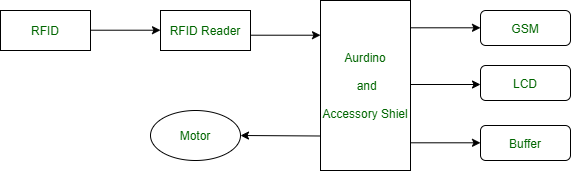
Components of an RFID System
- A scanning antenna
- Transceiver
- Transponder
Different Types of RFID Tags and Readers
- Fixed readers
- Mobile readers
Advantages and Limitations of RFID Technology
RFID technology supports rapid data access and real-time data, significantly reducing processing time. One of the advantages of RFID technology is that RFID tags can store large quantities of data and work without requiring direct line-of-sight contact; hence, increasing flexibility and suitability (Du Preez, 2020). In addition, the system’s non-line-of-sight functionality supports seamless integration of data into a variety of contexts. For instance, RFID advances manufacturing productivity and traceability by enabling the simultaneous scanning of hundreds of tags, optimizing overall operations.
However, due to the complexity of the technology, configuring RFID devices frequently takes longer (Manage your trash using RFID technology, 2023). For example, despite encryption, interception remains a concern, particularly with passive RFID devices, because even a few layers of household foil can block radio wave transmission (Du Preez, 2020). As a result, the use of active RFID systems that require batteries might increase the overall installation cost.
RFID Applications in Nuclear Waste Tracking
Current Challenges in Nuclear Waste Tracking
Nuclear waste management faces various challenges, including the need for accurate and effective tracking systems. Traditional approaches rely on manual data entry and paper-based certification, leading to inaccuracies and disorganization (Craig et al., 2018). In essence, tracking and monitoring nuclear waste is problematic due to its complexity, numerous procedures, and possible hazards (Craig et al., 2018). Consequently, modern technologies, such as RFID, are crucial for addressing these problems and improving the safety and competence of waste management measures.
Integration of RFID Technology in Waste Container Identification and Tracking
RFID technology offers a solution to the challenges of waste container identification and tracking. According to Houldsworth (2022), attaching RFID tags to waste containers allows each container to be separately identifiable and checked throughout its lifespan. In this regard, RFID readers can scan tags fast and accurately, gathering vital information including the type of waste, origin, and destination. Therefore, this connection simplifies tracking, improves accuracy, and reduces the risk of human data-entry errors.
Real-Time Monitoring and Data Collection Using RFID Systems
RFID tags attached to waste containers continuously communicate data to RFID readers, which rapidly update the position and status of each vessel. This real-time insight enables informed decision-making, thereby improving operational efficiency and ensuring a prompt response to situations. According to the American Nuclear Society (2021), RFID technologies, for example, have significantly improved waste transportation and disposal at Oak Ridge National Laboratory and CERN. As such, these systems demonstrate that RFID technology, with its continuous data transfer, improves waste management procedures and provides a safer, more efficient, and more responsive system overall.
Secure Access Control and Tamper Detection with RFID Tags
RFID tags can secure entry authorization control and tamper detection. For instance, it can use RFID tags when outfitted with safety precautions, enabling secure access management. In essence, advanced RFID tags may include encryption to prevent unauthorized access to sensitive data (Houldsworth, 2022). Furthermore, tamper-evident tags may detect attempts to interfere with or remove them, alerting operators to potential security breaches. These security measures enhance the overall safety and confidence in nuclear waste management facilities.
Case Studies of Successful RFID Implementations in Nuclear Waste Management Facilities
Different nuclear waste-handling plants have effectively employed RFID technology to enhance monitoring and tracking capabilities. For example, as reported by the American Nuclear Society (2021), Oak Ridge National Laboratory (ORNL) in the United States introduced an RFID-based waste shipment tracking system that improved waste conveyance and disposal efficiency and accuracy. Similarly, according to the Environmental Protection Agency [EPA] (2016), the European Organization for Nuclear Research (CERN) in Switzerland uses RFID technology to detect and control radioactive materials. These two case studies illustrate the efficiency of RFID in nuclear waste management and highlight its potential to address concerns about waste verification.
Benefits and Implications of RFID Technology in Nuclear Waste Tracking
One of the benefits of RFID technology in nuclear waste management is the provision of safe and secure nuclear waste handling. For example, by attaching RFID tags to garbage containers, the technology enables precise identification and continuous monitoring during the transit and storage of waste containers. Moreover, RFID scanners can read multiple tags simultaneously, saving time and effort during recordkeeping. This amplified efficacy not only saves time but also increases precision, thereby reducing manual errors. In other cases, computerizing data gathering and recording reduces the need for manual entry and physical assessments. This leads to more accurate registers and improved waste management systems, which decreases human error.
Despite its benefits, RFID technology poses potential risks and challenges for nuclear waste control. One implication is the risk of data breaches or unauthorized access to sensitive data from the constant transmission of RFID records. Additionally, using RFID technology in nuclear waste management encompasses strict adherence to a diversity of legal protocols and principles. The legal protocols include data security, waste management, and environmental protection. As a result, firms must ensure that their RFID systems comply with the above guidelines and obtain the necessary permissions before adopting the technology.
Challenges and Future Directions
Technical Challenges and Limitations of RFID Technology in Nuclear Waste Tracking
RFID technology faces substantial technical hurdles and limitations in nuclear waste monitoring. For instance, according to Abugabah et al. (2020), the restricted range of RFID readers and tags reduces tracking accuracy in big storage facilities. Furthermore, the presence of metal or liquid elements often interferes with RFID signals, affecting tracking performance (Abugabah et al., 2020). These technological glitches underscore the need for detailed design and testing to ensure the reliable, error-free operation of RFID systems for nuclear waste tracking.
Privacy and Data Security Concerns in RFID-Enabled Waste Management Systems
Privacy and data security are major deliberations in RFID-enabled waste management structures. For instance, RFID tags are known to continuously broadcast data, posing a risk of unauthorized access or interception of critical data. Notably, this danger is serious in the case of nuclear waste, as the data may contain information on the type, quantity, and location of radioactive materials (Abugabah et al., 2020). Therefore, to address these concerns, companies must implement strong encryption and access control to safeguard RFID data.
Conclusion
To summarize, RFID technology delivers significant benefits in nuclear waste management, including enhanced safety, efficiency, and accuracy. In addition, this RFID technology analysis emphasizes the understanding of technological problems, privacy concerns, and the importance of regulatory compliance. To advance capacity, future research should address the highlighted challenges and limitations by investigating the integration of RFID with other advanced tracking technologies. Furthermore, RFID technology installation should be tailored to each facility’s specific requirements and regulatory constraints. Therefore, the technology shows great promise for transforming nuclear waste management, and a detailed design for its real-world deployment is necessary to realize its potential advantages.
References
Abugabah, A., Nizamuddin, N., & Abuqabbeh, A. (2020). A review of challenges and barriers implementing RFID technology in the healthcare sector. Procedia Computer Science, 170, 1003-1010.
American Nuclear Society. (2021). Oak Ridge upgrades waste shipment tracking system.
Bauk, S. (2020). Modelling radioactive materials tracking in sea transportation by RFID technology. TransNav: International Journal on Marine Navigation & Safety of Sea Transportation, 14(4), 1-6.
Craig, B., Lee, J., Tsai, H., Liu, Y., & Shuler, J. (2013). ARG-US RFID for monitoring and tracking nuclear materials – The operating experience. Proceedings of the 17th International Symposium on the Packaging and Transportation of Radioactive Materials, 1-12.
Du Preez, M. (2020). How RFID technology is evolving the waste and recycling industry. Waste Advantage.
Environmental Protection Agency (EPA). (2016). Tracking radioactive materials with radiofrequency identification tags. Radio Protection.
Houldsworth, M. (2022). RFID in the tracking of hazardous waste. LinkedIn.
Liu, Y., Lee, H., Craig, B., & Shuler, J.M. (2018). Smart drum technology for radioactive and other hazardous materials – 18273. U.S. Department of Energy Office of Scientific and Technical Information.
Manage your wastes with RFID technology. (2023). Evreka.
Vander Beken, T., Dorn, N., & Van Daele, S. (2010). Security risks in nuclear waste management: Exceptionalism, opaqueness and vulnerability. Journal of Environmental Management, 91(4), 940-948.