
Hypotheses
This study evaluates the claim that a new sports performance beverage (GatorX) will increase the total time spent running during match play to at least 70% of playing time. To construct a statistical test, you need to create a null and an alternative hypothesis. Zero is a new sports performance beverage that does not increase running time during match play to 70% or higher. Mathematically, this can be expressed as:

In contrast, the alternative hypothesis states that the new sports performance beverage does increase the running time during match play to 70% or above:

Chi-Square Test
Given a specific threshold and the proportions of the total sample, a Chi-square test is appropriate because it compares observed with expected frequencies. In this case, the 75% share statement must be compared with the observed data. Because the hypothesis is directional, the study is interested in whether this proportion of players exceeds 70%; a one-sided test is suitable for evaluation.
According to the condition, the expected number of players running more than 70%, in particular 75%, will be 13 people out of 17 in the available sample. In fact, the measurements for the players in the corresponding table yield different values. In reality, 10 of 17 players scored below 70%. The number of degrees of freedom is calculated using the formula, since this case involves a 2×2 table presented in Table 1 below. Chi-square test calculation is carried out according to the following formula:
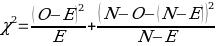


Table 1 – Degrees of Freedom
Findings
The critical value of chi-square can be determined by the degrees of freedom and the established critical level (p = 0.1); with these values, it is approximately 2.71. The P-value calculated using SPSS is 0.086. Accordingly, taking into account the fact that p-value = 0.086 < 0.1, and also that the resulting chi-square statistic (2.94) is more than the chi-square critical (2.71), the null hypothesis can be rejected, and the alternative one accepted. The main conclusion in this case is that there is sufficient evidence that the new sports performance beverage (GatorX) significantly increases athletes’ running time to 70% or more during match play.
Limitations
Despite the successful result, the study has several serious limitations that could significantly affect its validity and introduce reliability issues. Firstly, the sample size for such work is extremely small, which undermines the study’s statistical power and calls for expansion to achieve more accurate results. Secondly, in the players’ performances, this running indicator is influenced by numerous other factors not taken into account in the work: training level, player health, motivation, game situations, match importance, and so on. Thirdly, the long-term impact of the drink has not been assessed – whether the effect remains on future matches or is limited to one, and whether its use does not have health consequences.
Fourthly, in such studies, there is often a placebo effect, which can only be detected by using a control and experimental group of players (Hurst et al., 2020). Finally, the dosage of the drink the players received before the match was not specified, as the active substance may have reached the participants in the experiment in varying proportions, which could again lead to errors in the calculations of the experimental data. Accordingly, the results of the study should not be taken as reliable evidence at this time, as the indicated limitations clearly signal the need for further, more rigorous verification.
Reference
Hurst, P., Schipof-Godart, L., Szabo, A., Raglin, J., Hettinga, F., Roelands, B. & Beedie, C. (2020). The placebo and nocebo effect on sports performance: a systematic review. European Journal of Sport Science, 20(3), 279-292.